
Payments are complex. The industry’s great achievement is that almost nobody notices.
Behind a two second card tap sit issuers, acquirers, networks, processors, gateways, and a chain of handshakes the payer will never see. The industry spent decades abstracting that machinery into something that feels like nothing at all.
Software platforms building an embedded payments business get a rude awakening. All of that hidden complexity does not disappear. It moves onto their desk. The more a platform simplifies the management of payments, the more efficient the end to end process becomes, and the better the experience for everyone involved.
Advertisement

The friction is not in the transaction
Most platforms plan carefully for the transaction experience. Then they discover that almost none of the friction their merchants feel happens there. It happens in payment operations. Four areas cause most of the pain:
- Boarding. Getting merchants live quickly, with the right billing, funding, and risk configuration attached. Frictionless boarding means a better merchant experience and faster monetization for the platform.
- Underwriting. A function of boarding. Validating merchant identity and financial details to satisfy regulatory requirements and to avoid losses from fraud or financially weak businesses.
- Risk management. Fraudsters keep getting sharper, using AI and more sophisticated social engineering. Risk tooling has to evolve to stay ahead of them. It also has to stop blocking good merchants, because false positives cost real revenue and real trust.
- Chargebacks. Friendly fraud from legitimate cardholders gaming the system is one of the industry's largest loss categories. The goal is preventing as many as possible and winning most of what remains.
One size fits no one
Vertical SaaS platforms need payment infrastructure flexible enough to accommodate the nuances of their vertical and their use cases.
A property management platform has to bulk board thousands of properties, each with its own billing and funding configuration. It also processes the bulk of a month’s volume in the first few days, when assessments come due. Horizontal velocity controls built for ecommerce merchants that process evenly all month will read that spike as fraud, every single month.
Platforms serious about building a meaningful embedded payments business recognize what payment operations do to customer experience. They need an infrastructure partner that gives them a seat at the table when that operational experience gets designed, rather than a support ticket after it breaks.
Embedded intelligence enhances performance
Artificial intelligence is changing how this work gets done, the way it has in every other industry. Clunky workflows, report downloads, and spreadsheet analysis are on their way out.
Modern payment infrastructure should speed up payment operations. Merchants get proactive insights and recommendations that improve their payments business. A merchant filling out a boarding application, or asking why a payment declined, gets an answer in the moment instead of a support queue. Risky transactions get triaged in real time so the chargeback never happens, and when one lands anyway, an agent assembles the evidence package that wins it.
Intelligence reshapes risk itself. Rather than applying rigid velocity controls to every business, models trained on how an industry actually behaves build policies that fit it. The property management spike stops looking like fraud, because the system understands what the first of the month means.
Agentic commerce raises the stakes
This gets more urgent as AI agents begin transacting on behalf of buyers. In its Market Guide for Digital Commerce Payment Platforms, Gartner predicts that by 2030, AI agents will handle roughly one in ten online checkout interactions. Gartner also advises companies to evaluate how their payment vendors plan to support and protect agent payments.
Checkout is the easy part. The operational layer breaks first. Fraud models trained on human behavior read an agent as a bot and decline it. Underwriting has no framework for a merchant whose orders arrive from software. Dispute rules written for a cardholder who clicked “buy” do not map to a mandate an agent executed under a spending cap.
Platforms that have already made their payment operations intelligent will absorb that shift. Platforms still running rigid rules and manual review will feel it as a wave of false declines and disputes they cannot win.
The craft has to move up a layer
Payments have never been simple. The industry’s real achievement was making them feel simple to the person tapping a card.
That craft now has to extend one layer up. Platforms and their merchants deserve the same experience payers already have, with the complexity handled rather than exposed.
The vertical SaaS companies that win the next decade will not be the ones with the fastest processing. They will be the ones whose merchants never have to think about payments at all.
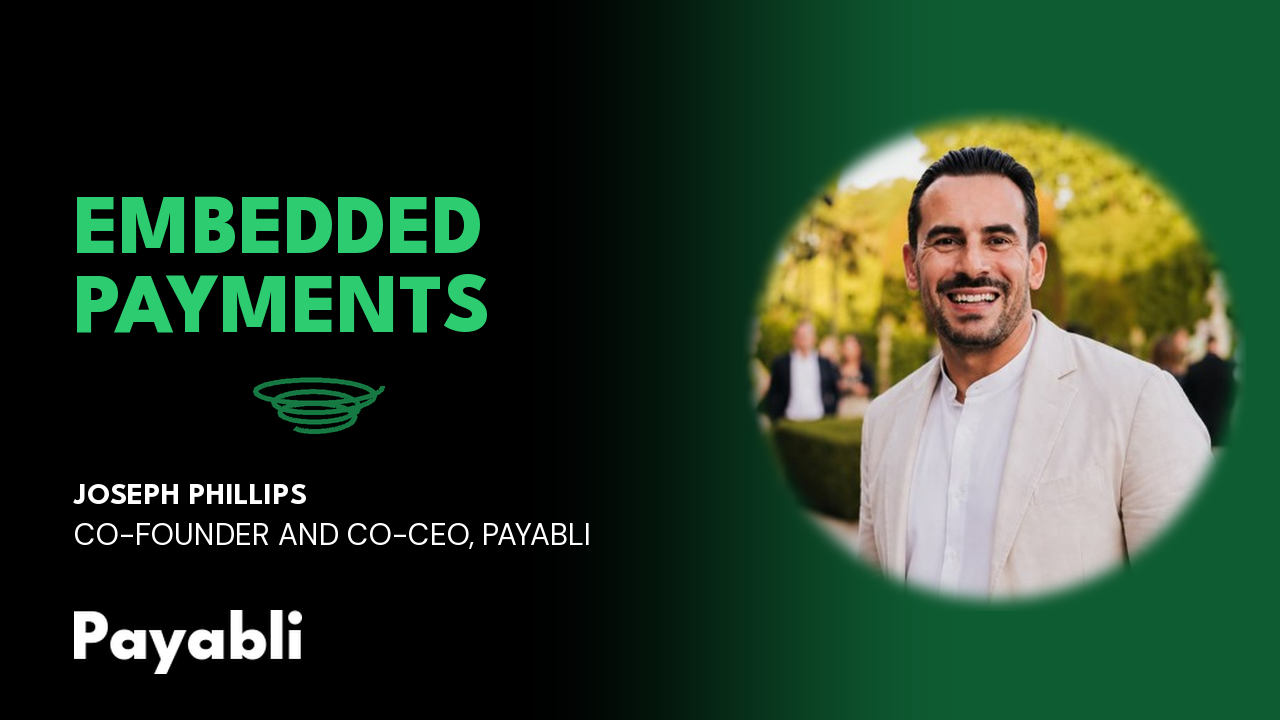
Joseph Phillips is Co-Founder and Co-CEO at Payabli.