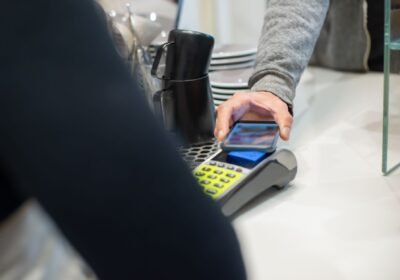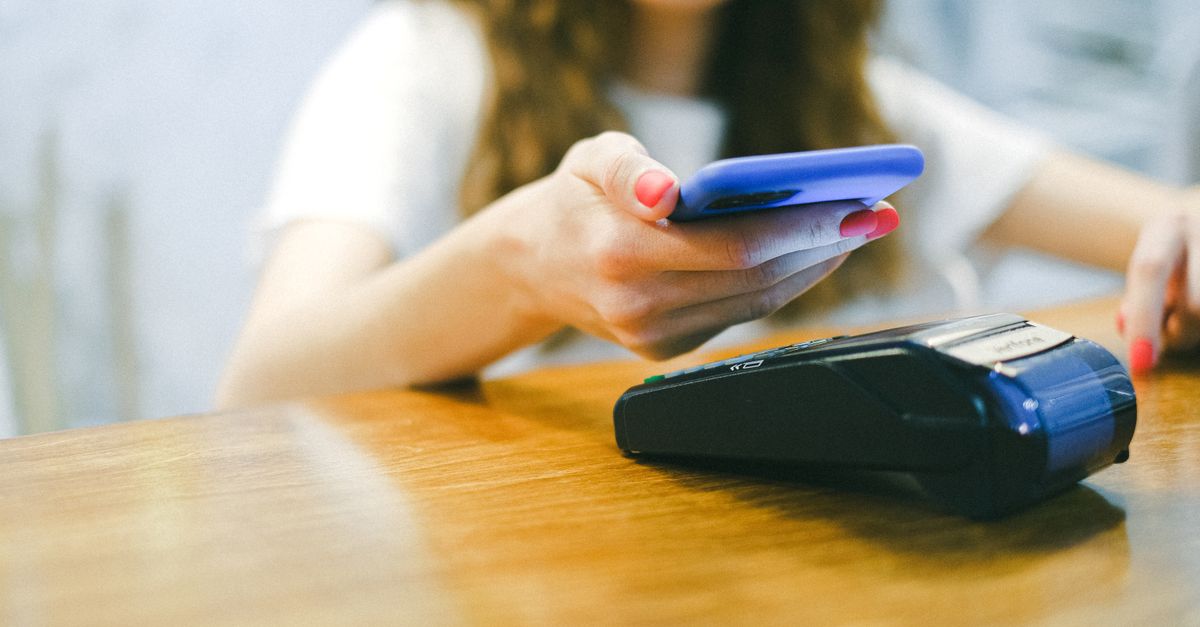

Physical retail just closed its biggest gap with card-not-present commerce. Walmart, the largest retailer in the United States by revenue, will begin accepting Apple Pay, Google Pay, Samsung Wallet and other contactless tap-to-pay options starting August 24, ending a decade-long holdout that made it the most conspicuous exception to an otherwise universal checkout standard.
The holdout that defined an era of checkout friction
Apple Pay launched in 2014. Every major US retailer eventually fell in line, some grudgingly, most within a few years. Walmart did not. The company built and defended its own proprietary system, Walmart Pay, which required shoppers to open an app and scan a QR code at checkout rather than tap a phone or card. The company’s rationale was rarely stated outright, but the practical effect was clear: Walmart Pay kept transaction data inside Walmart’s own systems rather than routing it through Apple, Google or the card networks’ tokenization layers, and it avoided the interchange dynamics that come with wallet providers sitting between retailer and customer.
That trade-off is now over. Walmart and its subsidiary Sam’s Club will roll out tap-to-pay at select US stores this week, expand to all US locations by the end of 2026, and extend the capability to fuel stations by mid-2027. Shoppers will be able to add their Walmart and Sam’s Club cards to Apple Wallet and other platforms, collapsing the gap between the retailer’s own private-label instruments and the wallets consumers already use everywhere else.
Advertisement

The staged rollout matters as much as the reversal itself. Walmart is not flipping a single switch nationwide; it is sequencing the change store by store, format by format, over roughly sixteen months. That pacing points to a retailer managing a large, complex point-of-sale hardware and software estate rather than one making a simple policy announcement, and it gives competitors, card networks and payment processors a long runway to plan around a customer base that will migrate its checkout behavior gradually rather than all at once.
Why the holdout finally broke
The shift signals something broader than one retailer changing its mind. Contactless and wallet-based payments have become the default expectation at checkout, not a convenience layer bolted onto cards. A retailer the size of Walmart holding out against that default was absorbing real friction cost: shoppers forced to dig out a physical card or hunt for a QR-scanning app inside a specific retailer’s app, at the one chain where tap-to-pay simply did not work. Google framed the move as removing exactly that friction. “Tap to pay using Google Pay is a proven time-saver for in-store shoppers, and now, we’re excited to bring that convenience to Walmart customers,” said Stavan Parikh, VP/GM of Payments at Google.
The economics of holding out had also shifted. Retailers that resisted wallet acceptance did so partly to preserve their own closed-loop payment data and partly to avoid ceding checkout real estate to Apple and Google. But as more of the retail industry’s transaction volume, loyalty tracking and card-present authentication have moved onto phones by default, the cost of staying outside that ecosystem compounds. A shopper who defaults to tapping a phone everywhere else has to consciously remember an alternate behavior for one chain. That is a tax on convenience Walmart apparently decided it could no longer justify charging its own customers.
What it means for the finance leader
For payments and fintech leaders, Walmart’s reversal removes the last major reference point retailers could point to when arguing that proprietary, closed-loop checkout systems remain commercially viable at scale. It also has second-order effects worth tracking. Card issuers and networks gain a large new pool of tap-to-pay transaction volume that was previously routed through Walmart’s own systems, with the data and interchange implications that follow. Wallet providers gain a marquee win that removes friction for consumers who have had to mentally segment “stores where tap-to-pay works” from “Walmart.” And other holdouts, wherever they remain in grocery, big-box retail or fuel, lose their most credible precedent for staying out.
Issuers of Walmart’s and Sam’s Club’s own store cards have a more direct stake in the outcome. Once those cards live inside Apple Wallet and Google Pay alongside every other card a shopper carries, they compete for top-of-wallet status on the phone’s own terms rather than benefiting from being the only option available inside a captive checkout flow. That is a harder competitive position to hold, and it puts pressure on the rewards and financing terms issuers attach to those store cards to stay meaningfully differentiated now that friction is no longer doing any of the retention work for them.
The rollout schedule is itself instructive. Fuel stations are the last category to get the capability, arriving only in mid-2027, which suggests that outdoor payment terminal hardware, not policy, is now the binding constraint on contactless coverage rather than corporate resistance. That is a meaningfully different problem for the industry to solve: a hardware refresh cycle rather than a negotiation over data and fees.
The comparison worth watching
Retailers’ own card programs are increasingly finding their way into the wallets they once resisted, a pattern already visible elsewhere in retail payments as private-label and co-branded cards move into Apple Pay and Google Wallet rather than staying siloed in retailer-only apps. Walmart’s move fits that same direction of travel: card issuers and payment platforms are consolidating around a small number of wallet standards rather than each retailer maintaining its own, a trend also showing up as card issuers compete to control more of the payment stack rather than cede it to a single dominant format.
What to watch next
The near-term test is adoption speed once the capability is live: whether Walmart shoppers actually switch to tapping a phone or card, or whether Walmart Pay’s existing user base keeps using the QR flow out of habit. The longer-term test is whether Walmart’s data strategy changes now that a meaningful share of transactions will route through Apple’s and Google’s tokenization systems rather than its own app. For a retailer whose scale gives it leverage most chains do not have, ceding that ground is itself a signal about how much value Walmart now places on removing checkout friction relative to the data control it spent a decade defending.
Source: Google