


- Six signing methods on one platform, including OTP, biometric, iris, face match, electronic signature and DSC, so banks, NBFCs and enterprises can match the level of identity assurance to the risk of each document
- Sequential, parallel and bulk routing pushes a single document out to hundreds of signers in one go, with live status for every signer and a tamper proof audit trail behind every signature
- Launch rides India’s eSign wave: over 87 crore Aadhaar eSigns issued as per the Ministry of Electronics and Information Technology, and Aadhaar face authentication doubling from 100 crore to 200 crore transactions in just over six months as per UIDAI
- SprintSign joins PaySprint’s unified banking infratech platform, which today powers over 5,100 partners through more than 200 API solutions
New Delhi, 27 October 2026: PaySprint, India’s full stack fintech and banking infratech platform, today announced the launch of SprintSign, a digital signing platform that lets a business upload a document, add signers, place signature fields, send it and receive a legally valid, Aadhaar eSigned document back in minutes. Built for banks, NBFCs, large corporates and high growth enterprises, SprintSign replaces the print, courier and chase cycle that still governs how most agreements, consent forms and loan documents get executed in India.
The problem SprintSign solves
For a large share of Indian businesses, getting a single document signed still means printing it, couriering it, waiting for it to come back, chasing signers on calls and, often enough, discovering a missing initial that sends the whole cycle back to the start. By PaySprint’s assessment of the traditional process, turnaround runs between three and seven days per document, a team’s week goes into reminder calls, and a single mistake forces a complete restart. SprintSign compresses that cycle to minutes, from any device, removes printing, courier and physical storage costs entirely and, unlike a scanned signature, attaches a verified identity to every signature.
From upload to fully signed, entirely online
SprintSign works in five steps. A business uploads any PDF, whether an agreement, contract or consent form, adds one signer or many, drags signature boxes to exactly where they are needed, and sends. Every signer receives a secure signing link, verifies their identity and signs. The executed document is stored securely and ready to use. Setup takes minutes and needs no technical skill.
Businesses choose how the document is routed: sequential signing moves it signer by signer in a set order, parallel signing sends it to everyone at once, and bulk signing pushes the same document out to hundreds of signers in one go. Signers are notified and reminded over email, WhatsApp and SMS, fields are pre placed so nothing gets missed, and the sender sees live status for every signer instead of making follow up calls. PaySprint estimates the shift from paper to SprintSign delivers up to 90 per cent faster turnaround, with a real time audit trail tracking the document end to end.
Every way a customer needs to sign
SprintSign offers six signing methods inside one workflow. Four are Aadhaar based: OTP eSign, where a one time password goes to the signer’s Aadhaar linked mobile with no app or device required; Biometric eSign, a fingerprint verified against Aadhaar records for in person and branch settings; Iris eSign, an iris scan matched to Aadhaar records for high security cases or where fingerprints are unreliable; and Face Match eSign, a selfie style face scan on a smartphone camera matched against the Aadhaar photograph, with no extra hardware. Alongside these sit an electronic signature option, where the signer draws, types or uploads a signature for low risk and internal paperwork, and DSC based signing with a token based Digital Signature Certificate for statutory filings, tenders and board documents where a certificate is mandated. The signer picks the method; the workflow stays the same.
Aadhaar eSign is legally recognised in India under the Information Technology Act, 2000. The Electronic Signature or Electronic Authentication Technique and Procedure Rules, 2015, notified by the Ministry of Electronics and Information Technology in January 2015 and listed by the Controller of Certifying Authorities, brought the eAuthentication technique using Aadhaar eKYC services into the Act’s framework, which is what gives a document signed this way its validity and enforceability.
A market that has already moved
Digital signing in India has reached scale. As per the Ministry of Electronics and Information Technology’s Annual Report for 2024 to 2025, over 87 crore eSigns have been issued across all empanelled eSign Service Providers, and more than 260 agencies now run on the eSign 2.1 production service. The identity layer SprintSign is built on is growing faster still: as per the Unique Identification Authority of India, Aadhaar face authentication crossed 100 crore cumulative transactions in January 2025 and 200 crore by 10 August 2025, doubling in just over six months. SprintSign’s Face Match eSign puts that same hardware free verification into a signing flow.
Where businesses put SprintSign to work
- Customer onboarding: KYC declarations and consent forms signed instantly, so customers do not drop off midway.
- Agreements and contracts: vendor, service and partnership agreements executed the same day, not the same week.
- Loan and financial documents: sanction letters, loan agreements, card issuance and mandates, with full identity assurance.
- Consent based workflows: legally valid consent for data, services or transactions, collected over a simple OTP.
- Declarations and attestations: employee declarations and customer undertakings, all signed remotely.
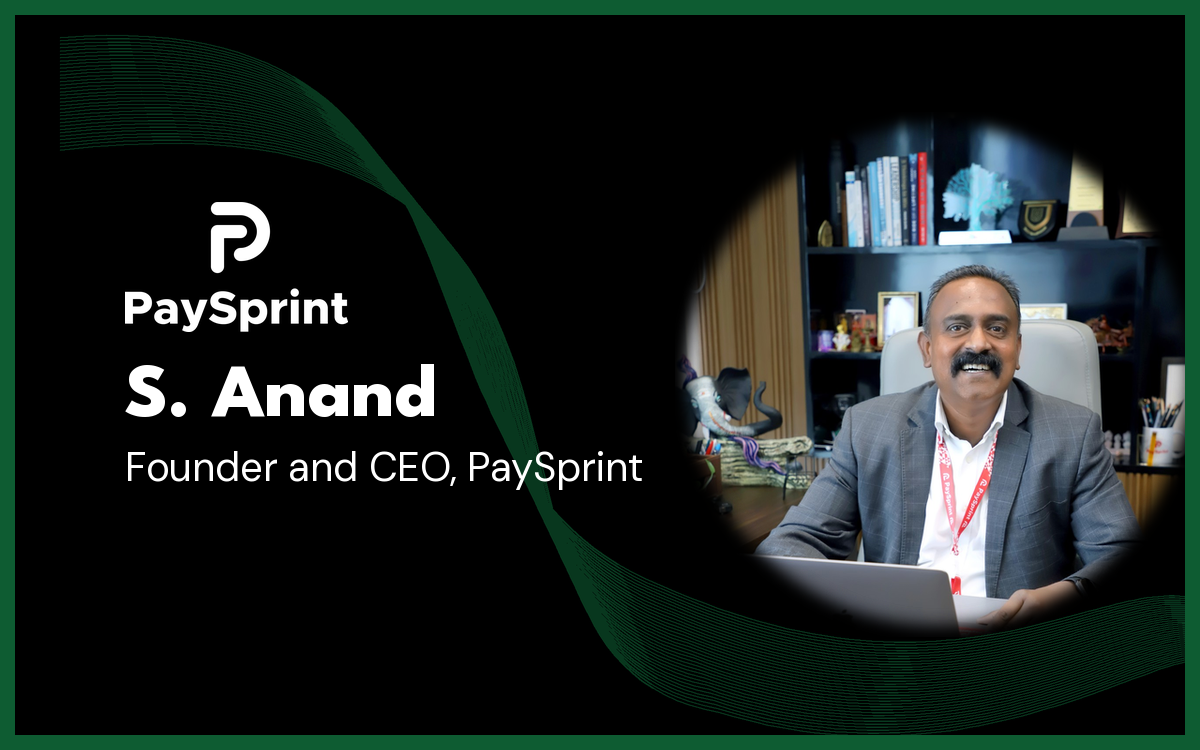
“Every signature collected the old way costs a business time, money and sometimes the deal itself. We built SprintSign so that the document a customer has to sign never becomes the reason they walk away. A verified identity sits behind every signature, the field is already where it needs to be, and the whole thing closes in minutes rather than a week. For a bank or an NBFC, that is the difference between a sanction letter executed today and one still sitting in a courier bag on Friday,” said S. Anand, Founder and CEO, PaySprint.
Part of one unified platform
SprintSign joins PaySprint’s unified, API first platform, which today powers over 5,100 partners through more than 200 API solutions across seven core product verticals spanning banking, payments, verification, escrow, software escrow, contract lifecycle management and payment orchestration. The platform is RBI and NPCI compliant by design, ISO 27001 certified and SOC 2 Type 2 compliant, with end to end encryption, multi factor authentication and audit readiness built in from day one. SprintSign is available now at www.paysprint.in.
About PaySprint
PaySprint is a banking infratech company delivering integrated platform solutions across banking, payments, verification, escrow, software escrow, and contract lifecycle management, empowering banks, NBFCs, and enterprises with secure and scalable financial infrastructure. Founded in 2020 and headquartered in New Delhi, PaySprint powers over 5,100 partners through more than 200 API solutions across seven core product verticals, including SprintNXT, SprintVerify, SprintEXcrow, SprintEX-Code, SprintContractX, and SprintPGX. The platform is RBI and NPCI compliant, ISO 27001 certified, and SOC 2 Type 2 compliant. For more information, visit www.paysprint.in
Media contact
Masuma Siddique, Founder and Chief Strategist, InkCraft Communications
E: masuma@inkcraftcommunications.com
Have a press release to share? Contact our team today.
Have an article or a piece you would like to contribute? Get in touch with the editorial team.



Comments are closed.